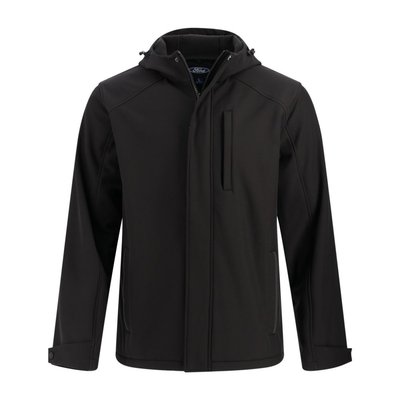
Cold-weather workwear is about layering: a base layer to manage sweat, a mid layer to trap warmth, and a shell to block wind and rain. Fleece and softshell sit at different points in that system.
What each layer actually does
| Fleece | Softshell | |
|---|---|---|
| Role | Mid layer (warmth) | Outer shell (protection + warmth) |
| Warmth | High — traps air efficiently | Moderate, with a warm lining |
| Wind resistance | Low (wind cuts through) | High — wind-blocking membrane |
| Water resistance | Low | Water-repellent (sheds light rain) |
| Breathability | Very high | High |
| Best as | Worn indoors or under a shell | Worn outdoors as the top layer |
Choose fleece when…
The work is mostly indoors, in a vehicle, or in mild conditions where wind isn't the enemy — warehouses, workshops, delivery cabs. Fleece is light, warm and breathable, and works as a mid-layer under a shell when it does get cold.
Choose softshell when…
Staff are outdoors and exposed — wind, drizzle, changeable weather. A 3-layer softshell blocks wind, sheds light rain and still breathes during active work. It's the single most versatile outdoor work jacket, which is why it's the most-ordered.
For teams that work in all conditions, order both and treat them as a system: fleece for warmth, softshell as the shell, and a hi-vis layer where required. One softshell with a zip-out fleece liner covers most of the year in a single SKU.
Details to specify
- Embroidery zones: chest and back panels reinforced for logos.
- Cuffs & hem: adjustable cuffs and a drawcord hem keep wind out.
- Pockets: zipped pockets matter outdoors — open pockets let rain and cold in.
- Heavy use: for hard wear, look at 300+ GSM bonded softshell.
Quick recommendation
- Indoor / mild / under a shell → fleece.
- Outdoor, wind & light rain → 3-layer softshell.
- All-weather team → softshell with zip-out fleece liner.