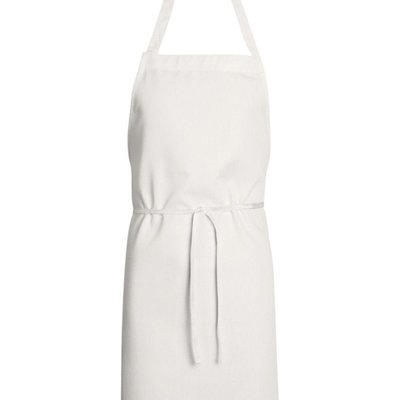
Aprons look simple, but the three main cuts solve different problems. Get the style right and the garment disappears into the work; get it wrong and staff fight it all day. Here is what each is built for.
The three apron styles
| Style | Best for | Why |
|---|---|---|
| Bib apron | Kitchens, baristas, butchers, food prep | Full chest-to-knee coverage protects against splashes, heat and stains. The workhorse of food service. |
| Waist (half) apron | Waiters, baristas, front-of-house | Light and fast to put on; keeps order pads, pens and card machines within reach without covering the shirt. |
| Cross-back apron | Long shifts, cafés, artisan / retail | Straps cross the back instead of pulling on the neck — no neck strain over an 8-hour shift, and an on-trend look. |
Fabric & weight
Most professional aprons are made from a 65% cotton / 35% polyester blend at 220–280 GSM. The cotton gives comfort and a natural handfeel; the polyester adds tear strength and keeps the apron looking crisp after repeated industrial washing. Heavier canvas (300 GSM+) suits butchers and heavy prep; lighter twill suits front-of-house.
Buyer tip
If aprons go through a commercial laundry, specify a poly-cotton blend and colour-fast, low-impact dyes. Pure cotton shrinks and fades faster under hot industrial wash cycles.
Details that matter
- Pockets: a split front pocket holds a pad and pen; a single deep pocket suits a phone or card reader. Decide by role.
- Straps: adjustable D-ring or buckle straps fit every body type from one SKU — important for mixed teams.
- Stitching: bar-tacked stress points (pocket corners, strap joins) are the difference between a one-season and a three-season apron.
- Branding: embroidery survives the wash far better than print on heavy aprons.
Quick recommendation
- Heat, grease or heavy prep → bib apron, 260–280 GSM poly-cotton.
- Table service or coffee → waist apron with a split pocket.
- Comfort over long shifts and a modern look → cross-back apron.